
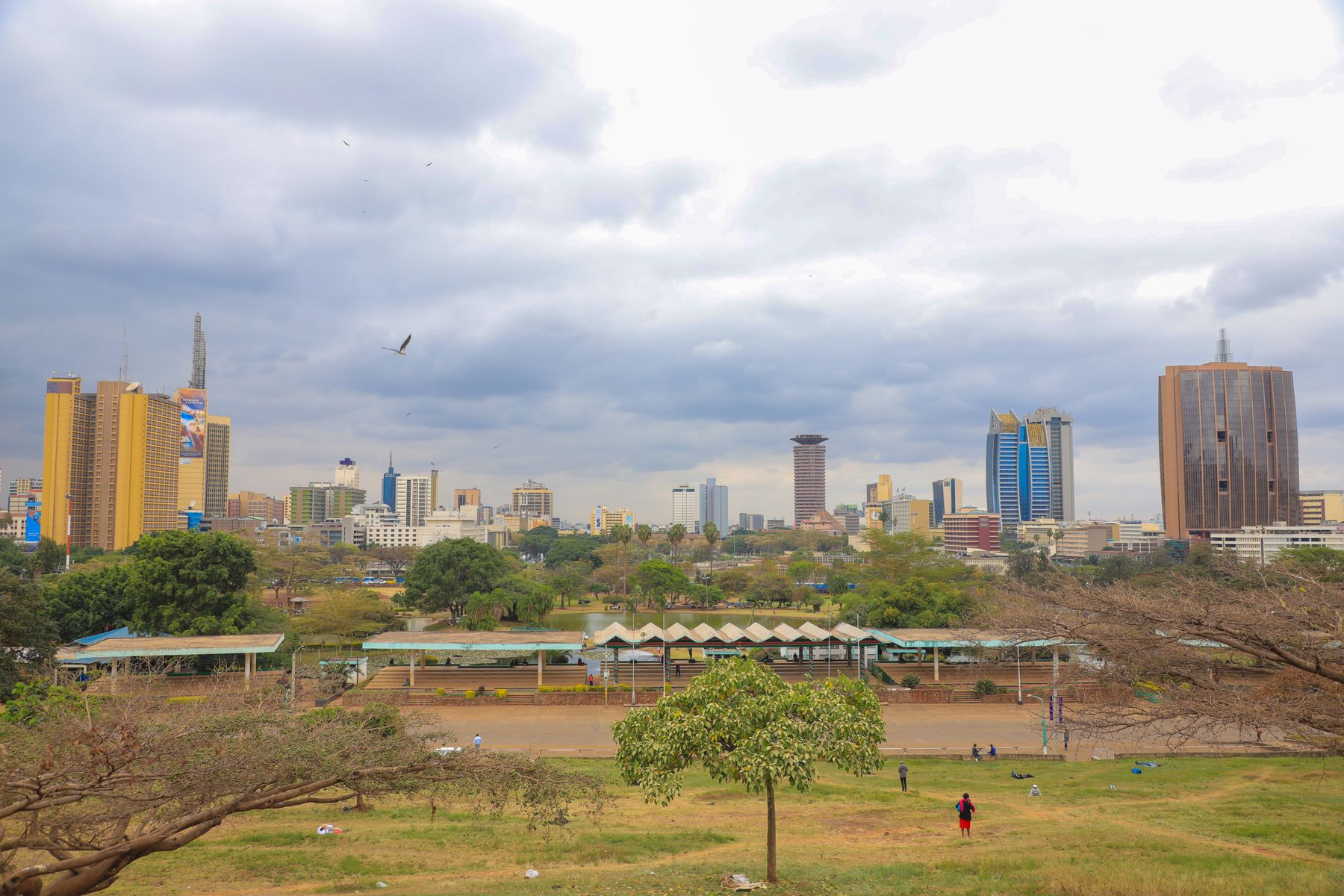
What August Actually Feels Like
August sits in Nairobi's long cool dry season, and the city behaves accordingly. Mornings in Kilimani and Lavington start around 12°C, and by 7am the matatus along Ngong Road are running with windows shut. Afternoons reach a pleasant 23–24°C, so a light jacket carried from breakfast to dinner is normal rather than pessimistic. Rain is unusual but not impossible; a short shower can pass over Westlands and leave Karen dry the same hour. The upside for visitors is that this is one of the most reliable stretches of weather in the calendar — no mud, no humidity, no need for a second pair of shoes.
Pack for two climates in one day. A morning game drive in Nairobi National Park, 7km south of the city centre off Langata Road, is genuinely cold in an open vehicle before 8am, and the same afternoon on a Karen café terrace is warm enough for short sleeves. Layers beat a heavy coat. If you are combining Nairobi with a coast trip, note that August on the Indian Ocean is cooler and windier than January, and Lamu's calmest months are elsewhere — a detail worth checking before you book flights onward.
Quiet Weekends, and What That Buys You
August is low season for Nairobi hotels, and the effect is visible in rates and availability rather than in closures. Mid-range rooms in Westlands, Kilimani and Upper Hill commonly sit in a band from roughly USD 80 to 160 a night, with the international five-stars on Upper Hill and around the CBD discounting more aggressively than they do in January or during the Great Migration months. You are not competing for rooms. Business travel dips, conference calendars thin out, and weekend occupancy in the leafy suburbs drops enough that asking for a late checkout or a quiet room away from the lift usually works.
The trade-off is atmosphere. Bars in Westlands are still busy on Friday, but Sunday is noticeably slower, and some restaurants in Karen and Gigiri trim their hours. This is a good month for travellers who want the National Museum on Museum Hill, the Nairobi Gallery and the railway museum without queues, and a bad month for anyone hoping for outdoor festival energy. Book the hotel on flexibility rather than the lowest non-refundable rate — August pricing is stable enough that you lose little by keeping a cancellation window.
Choosing Where to Sleep
For a first visit, Westlands is the pragmatic base: restaurants, pharmacies and supermarkets within walking distance, 20–40 minutes by taxi to the national park gate and 45–60 minutes to JKIA depending on traffic on Mombasa Road. Kilimani and Lavington are quieter, greener, and better value per square metre, though you will rely on taxis more. Upper Hill suits anyone with meetings in the CBD and is walkable to the KICC, but it empties out at night. Karen is only worth it if you want space and garden — it is 20km from the centre and a 45-minute drive in rush hour.
For a short stay I would book Westlands or Kilimani and skip the airport hotels unless you have an early flight. The much-discussed Nairobi Expressway has cut the JKIA run considerably from the western suburbs, but it is tolled and traffic still compresses around 7–9am and 5–7pm. If you are here for two or three nights before a safari, a hotel with a reliable breakfast from 6am matters more than a pool you will never use in 20°C weather. Check that the room has heating or good blankets; August nights are the one thing guests underestimate.
Filling the Days Without Overpaying
The park is the obvious anchor, and August's dry grass and bare trees make wildlife easier to spot. Book a half-day drive rather than a full day; by noon the light is hard and the animals are resting. Afternoons belong to the Sheldrick Wildlife Trust elephant orphanage in Langata, which requires advance booking for its one-hour public visiting slot, and to the Giraffe Centre a few kilometres away on Duma Road. Both are close enough to combine. Karura Forest, off Limuru Road, is excellent in August — cool, shaded and quiet on weekday mornings, with the river walk taking about two hours at an easy pace.
Food is where Nairobi rewards a little planning. Try a proper nyama choma lunch in Dagoretti or along Kiambu Road rather than a hotel grill, and Kenyan specialty coffee in a Kilimani roastery. Skip the city-centre street food if you have a sensitive stomach and a long flight ahead, not because it is unsafe but because you cannot verify how long anything has sat out. Tipping around 10 per cent in restaurants is normal where service is not already added. Carry small notes for parking attendants and guards, a routine part of daily logistics here.
Getting Around and Out
Ride-hailing apps work well across the western suburbs and the airport, and a cross-city trip from Westlands to Karen typically takes 40–55 minutes outside peak hours. Matatus are cheap and fast but confusing for a first visit; save them for daytime routes you already understand. Mobile money is the default for taxis, shops and cafés, so set up an e-wallet line at the airport or a carrier shop on arrival rather than relying on cards everywhere. Most hotels accept cards; many small restaurants and market stalls do not.
Day trips are possible and rewarding, and August is good for them because the roads are dry. Naivasha and its lake are about 90 minutes northwest on the A104, and the Rift Valley escarpment viewpoint at Limuru makes a sensible stop. Note this as a side trip only — the base for your nights should stay in Nairobi, where the hotel choice, breakfast and evening options are far better. Skip the temptation to day-trip to Amboseli; it is a five-hour round drive and you will spend more time in the vehicle than with the elephants.
Questions, answered
How cold does Nairobi get in August at night?
Overnight lows in August typically sit around 11–13°C, and rooms in older buildings can feel colder than the number suggests. Ask whether your hotel provides extra blankets or heating, and pack a warm layer for early game drives and open-air restaurants.
Is August a good time to visit Nairobi National Park?
Yes. The long dry season means shorter grass, thinner vegetation and better visibility for wildlife, and the park is only about 7km from the centre. Go early; gates open at dawn and the light and animal activity are best before 10am.
Do I need to book the elephant orphanage in advance?
The Sheldrick Wildlife Trust in Langata runs one public visiting hour daily and limits numbers, so booking ahead through its official channel is sensible. Combine it with the Giraffe Centre nearby, which is a short drive away and easier to visit on the day.
Where should I stay for a first trip to Nairobi?
Westlands for convenience and walkable restaurants, or Kilimani for quieter streets and better value. Upper Hill suits business travellers. I would avoid basing a short holiday stay in Karen unless garden space matters more to you than proximity.
How long does it take to get from JKIA to Westlands?
Allow 45–60 minutes outside peak hours and up to 90 minutes between 7am and 9am or 5pm and 7pm. The Expressway has shortened the run, but it is tolled and queues at the exit can still add time.
Is it worth combining Nairobi with Naivasha?
As a day trip, yes — roughly 90 minutes each way on the A104, with a stop at the Rift Valley escarpment viewpoint. Keep your hotel nights in Nairobi and treat the lake as an excursion rather than moving your base twice in a short trip.
How much should I tip in Nairobi?
Around 10 per cent in restaurants where a service charge is not already included. Small amounts to parking attendants and guards are a normal part of daily logistics. Carry small notes, since change is often scarce.
What should I pack for Nairobi in August?
Layers: a warm mid-layer for mornings and evenings, a light jacket for game drives, comfortable walking shoes for Karura Forest, and one smart-casual outfit if you plan to eat in Westlands hotels. Rain is unlikely but a compact umbrella costs little.
Doing good is the business: every booking through Stay Nairobi funds one verified tonne of carbon removal — same room, same price, no markup.
Start your search