
The budget, line by line
Here is the working split: KSh3,000 for a bed, KSh1,300 for food, KSh700 for transport, KSh1,000 for an attraction and KSh500 of slack for water, a coffee and the day you get caught in the rain. That is KSh6,500. It is a real budget for a solo traveller who is comfortable with matatus, eats where Kenyans eat, and does not need a hotel lobby. Two people sharing a room do considerably better, because the bed line halves per person and the attraction line does not.
The one thing that breaks it is Nairobi National Park, at roughly KSh5,600 non-resident entry plus transport. Do not try to absorb it into a single day; budget it as a separate one-off and run three lean days around it. Everything else on a good Nairobi itinerary — Karura Forest at about KSh600, the National Museum at roughly KSh1,600, the Giraffe Centre at about KSh1,500 — fits comfortably inside the daily attraction line.
Sleeping for KSh3,000 or less
Hostels with dorm beds cluster in Westlands, Parklands and around Ngong Road, at KSh1,500-2,500 a night including wi-fi and usually a kitchen. Private rooms in the same places run KSh3,000-4,500. Guesthouses in Parklands, South B, South C and the Langata side of Ngong Road offer clean private rooms with a shared bathroom from KSh2,500 and en-suite from KSh3,500. Budget hotels in the CBD around River Road and Ngara are cheaper still, from KSh1,800, but the noise and the after-dark environment are not worth the saving.
The best value at this level is a Kilimani or Kileleshwa studio apartment at KSh4,500-6,500 shared between two, because you get a kitchen, a gate, a generator and a lift, and cooking two meals a day pulls the food line down to KSh600. Book weekly and ask for a discount — 15-20 per cent off a seven-night stay is normal if you message directly. Avoid the sub-KSh2,000 listings in Eastleigh and Pipeline; they are cheap for reasons that will cost you time and comfort.
How far ahead to book, and the cheapest months
Budget rooms in Nairobi rarely sell out, so a hostel dorm or a Parklands guesthouse can be booked a week or two ahead at the going rate. The exception is a well-reviewed Kilimani, Kileleshwa or Westlands studio under KSh6,500 a night — those go three to four weeks ahead in the busy months, so lock one early if a kitchen matters to your food line. Message the host directly rather than booking through a platform: a seven-night stay commonly gets 15-25 per cent off, and a fortnight can land close to a monthly rate. Pay the deposit by M-Pesa to secure the room and skip the card service fee an online booking adds.
The long rains from late March to May are the cheapest window. Guesthouse rates drop 20-30 per cent and apartments sit half-empty, so a KSh4,500 studio can fall to KSh3,200; mornings are usually clear and the downpours come in the afternoon and last an hour or two. June to August is cool and mostly dry, running 12-24°C, and still good value before the September conference surge lifts CBD and Westlands prices. Avoid mid-December to early January and the April and August school holidays if the bed line is what you are protecting — those are the three windows when even budget rooms creep up.
Eating well on KSh1,300 a day
Breakfast is chai and two mandazi from a kibanda for KSh100-150, or a mug of uji. Lunch is the meal to spend on: a plate of ugali with sukuma wiki and beef stew at a local restaurant runs KSh250-400, pilau or beans and chapati KSh200-350, and a half-kilo of nyama choma at Kenyatta Market with ugali and kachumbari comes to about KSh700-900 shared between two. Dinner from a street grill — mutura at KSh50-100 a slice, smokie pasua at KSh70, roast maize at KSh30 — costs almost nothing.
The trap is mall and Westlands restaurant prices, where a burger is KSh1,200 and a coffee KSh450. One café coffee a day is affordable; two meals a day in that world is not. Supermarkets at Yaya Centre, Sarit and Naivas branches sell excellent Kenyan produce cheaply — avocados at KSh30-60, mangoes in season at KSh50, a kilo of tomatoes KSh120. Fill a water bottle from a filtered dispenser in your accommodation rather than buying 500ml bottles at KSh70 all day.
Transport: KSh700 a day, honestly
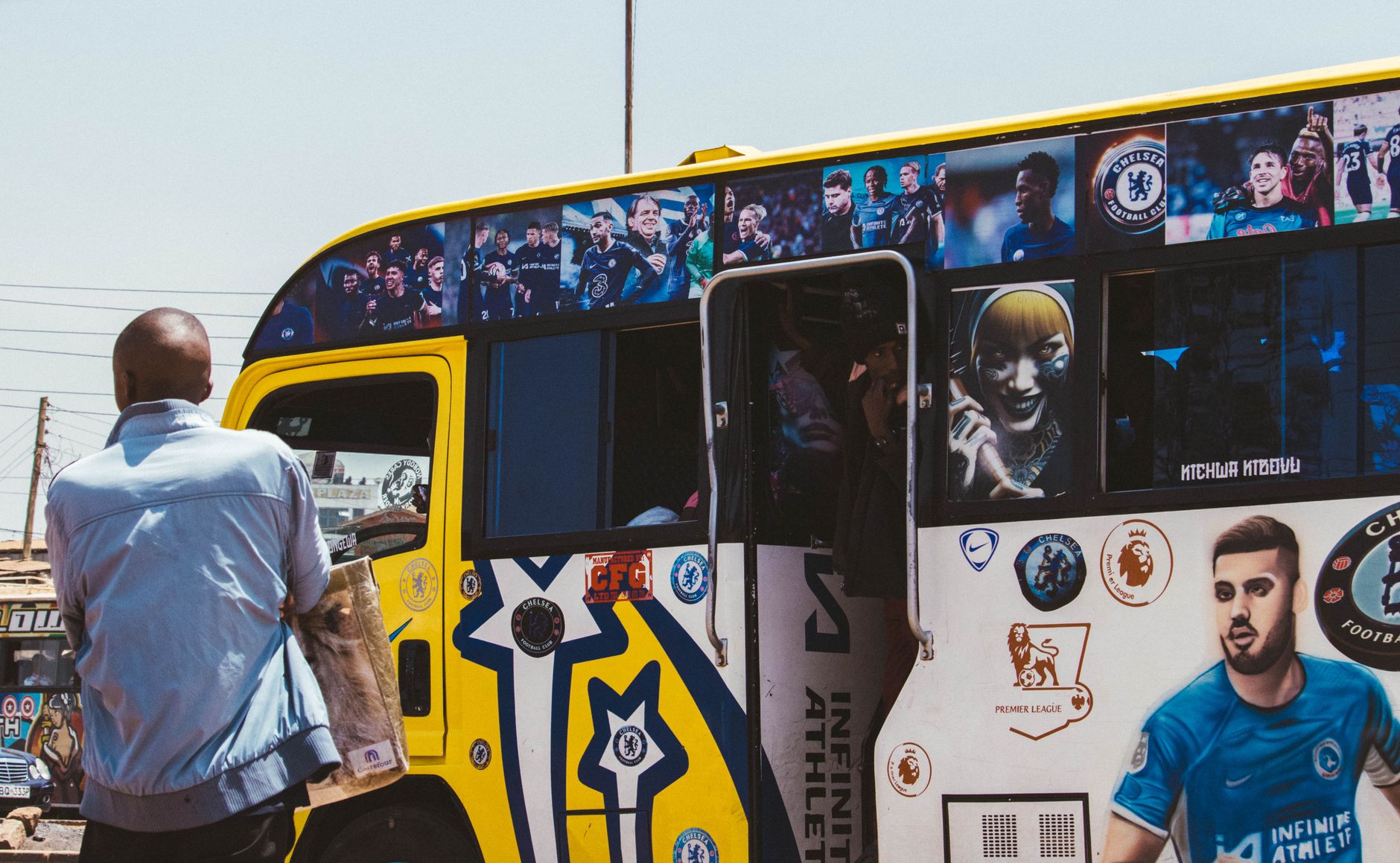
Matatus are the backbone: KSh50-100 for most in-city hops, rising to KSh150 at peak or in heavy rain when conductors raise fares openly. Route 46 runs to Kawangware via Kenyatta Avenue, 125 and 126 head to Langata, Karen and Ongata Rongai from the Railways stage, 34 goes to the JKIA area, and 111 runs Ngong Road out to Ngong town. Super Metro and Citi Hoppa buses on the main corridors are the calmest option and cost the same. Have coins and small notes ready.
Ride-hailing fills the gaps: Bolt and Little are usually the cheapest, with a 4km Westlands-to-Kilimani trip at KSh250-450 off-peak, doubling in rain and at surge. Two ride-hail journeys a day is the realistic budget allocation. Boda boda motorbikes are cheaper and quicker at KSh100-250, but Nairobi's road-injury statistics are grim; if you use them, insist on a helmet and refuse to ride at night. Walking the CBD grid and Westlands in daylight is free and the best way to see the city.
Getting to and from JKIA cheaply
JKIA sits about 18km southeast of the CBD, and the arrival kerb is where budgets take their first hit. The airport taxi desk quotes KSh2,000-2,500 into town; the same trip booked on the Bolt or Little app runs KSh800-1,500 off-peak, but you must walk to the marked ride-hailing pickup zone in the multi-storey car park, because app cars are not allowed at the terminal kerb where the desk taxis wait. The Nairobi Expressway cuts the drive to 20-25 minutes against an hour of Mombasa Road traffic, but the toll — about KSh360 for the JKIA-to-Westlands car segment — is added to your fare, so it is worth paying at rush hour and skippable at midday.
The rock-bottom option is matatu route 34 from outside the airport perimeter to the Railways stage in the CBD for KSh80-100, but it is slow, crowded and not sensible with luggage or after dark. The smarter budget move is to book a guesthouse or hostel that includes a free or fixed KSh1,500 airport pickup — many in Westlands, Karen and South B do — which removes the tired arrival-night haggle. Withdraw shillings from a bank ATM inside the arrivals hall rather than changing money at the airport forex desks, whose rates run 3-5 per cent worse than a bureau in town or a plain ATM withdrawal.
The KSh1,000 attraction line: what fits
Karura Forest at roughly KSh600 for non-resident adults buys a full day — 50km of trails, a waterfall, caves, a river café, and bike hire at about KSh500 an hour. The Nairobi Arboretum is cheaper still and delivers 350 tree species and vervet monkeys. The Railway Museum near the station is a wonderfully eccentric KSh600-ish for the colonial rolling stock and the carriage from which a lion took a superintendent at Kima in 1900. The Nairobi Gallery at the old provincial commissioner's building costs about the same.
Above the line, budget separately for these: the National Museum of Kenya on Museum Hill at roughly KSh1,600 for the hominid fossils and the snake park, the Giraffe Centre at about KSh1,500, the Sheldrick nursery at about KSh2,000 booked in advance, and Bomas of Kenya at Langata for the traditional dance programme, which runs afternoons. Alternate a KSh600 day with a KSh1,600 day and the weekly average holds. Free options: the City Market on Muindi Mbingu Street, Uhuru Park and the Maasai markets.
Day trips without breaking the budget
The Ngong Hills are the best cheap day out: a matatu on route 111 from the Ngong Road stage to Ngong town costs about KSh100, a modest ranger fee gets you onto the ridge, and you walk as far along the seven peaks as you like at around 2,460m with the Rift Valley below. Take water and a windproof layer, and hire the ranger escort. Total spend including lunch: under KSh1,500. It beats most paid attractions in the city.
Lake Naivasha is doable on a budget if you commit to a full day. Matatus leave the Nairobi CBD for Naivasha town for roughly KSh500-700 and take two to two and a half hours via Mai Mahiu, with the Rift escarpment viewpoint on the way. From town, a boda or shared taxi reaches the lakeshore, and a shared boat costs KSh1,000-2,000 a head if you find others. Hell's Gate entry and bike hire push the day past KSh6,500, so treat it as a two-day budget rolled into one.
The savings that matter most, ranked
Rank your money-saving moves by how many shillings each one actually returns, and accommodation wins by a distance. A Westlands or Gigiri four-star runs KSh12,000-18,000 a night; the same sleep in a Kilimani studio is KSh4,500-6,500, a Parklands guesthouse KSh2,500-3,500, and a hostel dorm KSh1,500-2,500. Dropping from the hotel to the guesthouse saves roughly KSh10,000 every single night — more than every other cut on this page combined. Decide the bed line first and everything downstream gets easier, because a gate, a kitchen and a generator in a KSh5,000 studio removes the taxi-home and mall-dinner costs a cheap-but-badly-placed room quietly adds back.
Second is where you eat. A Westlands or mall sit-down lunch is KSh1,000-1,400; the identical hunger filled at a local restaurant with ugali, sukuma and stew is KSh250-400. Two meals a day in the local world rather than the mall world saves close to KSh1,800 daily — a week of that is another night's room. Third is the airport transfer: booking Bolt from the car-park pickup zone instead of the arrivals taxi desk saves KSh700-1,500 in one move. Everything after that — skipping a KSh70 water bottle, walking the CBD instead of a KSh300 hop — is real but marginal. Fix the top three and the small leaks stop mattering.
Free and nearly-free Nairobi
You can fill whole days for the price of a matatu fare. Uhuru Park and the adjoining Central Park sit five minutes from the CBD and cost nothing to walk; paddle boats on the Uhuru Park lake are about KSh300 for twenty minutes. Jeevanjee Gardens off Moi Avenue is free and shaded. Uhuru Gardens on Lang'ata Road, reopened after its restoration, is a free national monument with the independence memorial and landscaped grounds. The rooftop of the KICC — the cylindrical tower on City Hall Way — is the cheapest big view in Nairobi at about KSh500, and it beats any paid observation deck the city pretends to offer.
The Maasai Market is free to browse and moves to a different spot each day — the High Court car park in the CBD on Saturdays, Village Market in Gigiri on Fridays and Sundays, Prestige Plaza on Ngong Road on Tuesdays. Go to look, not just to buy: opening prices run three to four times the real one, so a KSh1,500 carving should settle near KSh500, and walking away is the strongest tool you have. The City Market on Muindi Mbingu Street trades fruit, flowers and crafts under one roof. None of this costs entry, and an afternoon of it is a genuine Nairobi day for the bus fare there and back.
Splitting costs: two people, or a group
Nairobi rewards sharing more than most cities because the fixed costs are large and the per-head costs are small. A KSh4,500 Kilimani studio split two ways is KSh2,250 a head — below a solo dorm bed, with a private room and a kitchen thrown in. Booking a whole apartment for a fortnight and asking for the monthly rate can drop the nightly figure another 30-40 per cent, so a KSh5,000 studio can effectively cost KSh3,000 a night across four people. The attraction lines do not shrink when you share, but the bed and the airport transfer — the two biggest single numbers — halve or quarter immediately.
Day trips are where a group pulls furthest ahead. A car and driver to Nairobi National Park for a morning game drive runs KSh6,000-9,000; split among four that is under KSh2,000 each and beats the fixed seat price of a shared tour. A boat on Lake Naivasha is KSh1,000-2,000 for the whole vessel, so six people pay about KSh300 apiece instead of chartering alone. Even a Ngong Hills ranger escort is one flat fee spread across the party. The one thing that does not divide is national-park entry, charged strictly per person, so build that in per head and share everything with wheels or a hull.
Where the budget leaks, and how to plug it
Three leaks account for most blown budgets here. First, surge ride-hailing in the rain — an April downpour can triple a fare, so wait it out with a KSh200 coffee instead. Second, mall food, where a casual lunch costs what three local meals do. Third, ATM fees: Kenyan bank machines typically charge KSh300-700 per foreign withdrawal, so take out KSh30,000-40,000 at a time rather than KSh5,000 daily, and keep it split between your bag and your room.
Get an M-Pesa-enabled local SIM on arrival — a Safaricom line with a bundle costs a few hundred shillings, needs your passport, and turns mobile money on. Almost everything in Nairobi, from matatu fares to market stalls to park entry, takes M-Pesa, and it saves you carrying cash. Tipping is modest: round up a taxi fare, leave 5-10 per cent in a sit-down restaurant, KSh100-200 for a guide's assistant. Do not tip in a kibanda; nobody expects it and it marks you out.
Resident and non-resident prices: where the gap bites
Kenya runs open dual pricing at its gates, and it is the single biggest reason a Nairobi day costs a visitor more than a local. Nairobi National Park is US$43, about KSh5,600, for a non-resident against roughly KSh1,030 for a Kenyan citizen; the National Museum on Museum Hill is about KSh1,600 for a non-resident but nearer KSh200 for a resident; the Giraffe Centre charges non-residents about KSh1,500 where a resident pays around KSh500. There is no dodging it — a passport is checked at the till — so the money-saving move is not to argue the rate but to choose where the premium is small or absent.
That is exactly why the flat-priced sights anchor a budget week. Karura Forest at about KSh600, the Nairobi Arboretum, the restored Uhuru Gardens monument and the KICC rooftop at roughly KSh500 charge everyone close to the same modest fee, so a whole day of them costs a visitor almost what it costs a Nairobian. If you hold an East African Community passport or a Kenyan work or residence permit, carry it and the resident rate applies at every gate — that alone can cut a park day by 80 per cent. Students with an international card get quiet reductions at the National Museum; ask, because it is rarely posted.
Front-load the free-and-flat sights and treat the two or three genuinely non-resident-priced experiences — a park game drive, the Sheldrick nursery at about KSh2,000, the Giraffe Centre — as the one paid highlight of a day, never three stacked into one. Children's rates run roughly half the adult figure across the museums and the Giraffe Centre, so state ages at the counter rather than paying the flat adult price a busy cashier defaults to. Book the Sheldrick nursery's single 11am public hour online in advance; walking up is unreliable and no cheaper, and a wasted matatu across town to a full gate is the most avoidable spend on this list.
Data, wi-fi and the small daily costs
Staying connected is cheap here if you buy it right. A Safaricom SIM costs about KSh100 to register with your passport, and data bundles are the thing to buy rather than pay-as-you-go rates, which drain credit fast: 1-2GB runs KSh100-250 and a weekly 3-6GB bundle KSh500-1,000, plenty for maps, M-Pesa and Bolt. Free wi-fi covers the gaps — Sarit, Yaya, The Hub Karen and Village Market malls, most cafés and many guesthouses — so save heavy downloads for a hotspot and keep the bundle for the street, where you actually need directions and a ride.
The small costs add up faster than any single splurge. Bottled water is KSh50-70 for 500ml, so refill from a filtered dispenser and carry a bottle; a neighbourhood dobi washes a full load for KSh300-500 against KSh150-300 a piece at a hotel laundry; phone charging is free anywhere you buy a coffee. A KSh1,500 power bank from a Text Book Centre or a supermarket earns its price the first time a scheduled power cut lands mid-booking, because outages, though shorter than they were, still happen on a published rota in most estates.
Drinks and float are the last leaks. A café flat white is KSh350-500 in Westlands and the malls; a chai from a kibanda is KSh30-50, so alternate one sit-down coffee a day with kibanda chai and the drinks line holds under KSh300. On M-Pesa, paying a till or paybill — Buy Goods — is free to you, while sending money to a person and withdrawing cash at an agent both carry a tariff, so pay by till wherever a stall offers one rather than cashing out and handing over notes. Packaged snacks from Naivas or Carrefour undercut kiosk prices on everything you would otherwise grab on the move.
Questions, answered
Is KSh6,500 a day realistic in Nairobi?
Yes for a solo traveller staying in hostels or budget guesthouses, eating at local restaurants and using matatus. It covers a bed at KSh3,000, food at KSh1,300, transport at KSh700 and one attraction at KSh1,000. Nairobi National Park entry, at roughly KSh5,600, needs budgeting separately.
What is the cheapest way to get around Nairobi?
Matatus and the Super Metro and Citi Hoppa buses, at KSh50-150 per journey depending on distance, time and weather. Ride-hailing costs KSh250-600 for a typical city hop. Boda boda motorbikes are cheaper again but carry a real injury risk, especially after dark.
Do I need cash in Nairobi or is mobile money enough?
Get a local SIM with M-Pesa on day one — it works for matatus, market stalls, park entry, restaurants and most shops. Keep some cash for small kiosks. Withdraw KSh30,000-40,000 at a time, since foreign-card ATM fees run KSh300-700 per transaction.
How much should a taxi from JKIA to the city centre cost?
Expect KSh800-1,500 on Bolt or Little booked from the app, or KSh2,000-2,500 from the airport taxi desk. The Nairobi Expressway adds about a KSh360 toll but cuts the drive to 20-25 minutes. Walk to the ride-hailing pickup zone in the car park, since app cars cannot collect at the terminal kerb.
When is the cheapest time to visit Nairobi on a budget?
The long rains from late March to May are cheapest — guesthouse and apartment rates fall 20-30 per cent, and mornings are usually clear before afternoon showers. June to August is cool and mostly dry with good value. Avoid conference season from September to November and mid-December to early January, when rooms cost the most.
What can you do for free in Nairobi?
Plenty. Uhuru and Central parks, Jeevanjee Gardens and the restored Uhuru Gardens monument all cost nothing to enter. The Maasai Market is free to browse as it rotates around the city by day, and the KICC rooftop gives the best city view for about KSh500. An afternoon of these costs only your bus fare.
How much can two people save versus travelling solo?
A large amount, because the biggest numbers are per-room, not per-person. Sharing a KSh4,500 studio makes the bed line KSh2,250 each, below a dorm bed, and a single airport transfer or Naivasha boat splits in half. Expect two people sharing to run roughly a third cheaper per head than one travelling alone.
Is booking a monthly apartment rate worth it for a longer stay?
For anything past ten nights, yes. Message the host directly and ask for the monthly rate: a KSh5,000-a-night Kilimani or Kileleshwa studio commonly falls 30-40 per cent, and having your own kitchen removes most restaurant spend. Pay the deposit by M-Pesa to skip the platform's card service fee.
How much does mobile data cost for a visitor in Nairobi?
A Safaricom SIM is about KSh100 to register with your passport, and data is cheap in bundles: 1-2GB runs KSh100-250 and a weekly 3-6GB bundle KSh500-1,000, bought in the app or by USSD. That easily covers maps, M-Pesa and ride-hailing. Free wi-fi at malls, cafés and most guesthouses handles the heavy downloads.
Can I avoid the non-resident price at Nairobi's parks and museums?
No — passports are checked at the gate, so non-residents pay the higher rate: about KSh5,600 at Nairobi National Park and KSh1,600 at the National Museum. The saving is in choosing flat-priced sights like Karura Forest, the Arboretum and the KICC rooftop, and making one non-resident-priced experience the paid highlight of a day rather than three.
Doing good is the business: every booking through Stay Nairobi funds one verified tonne of carbon removal — same room, same price, no markup.
Start your search