
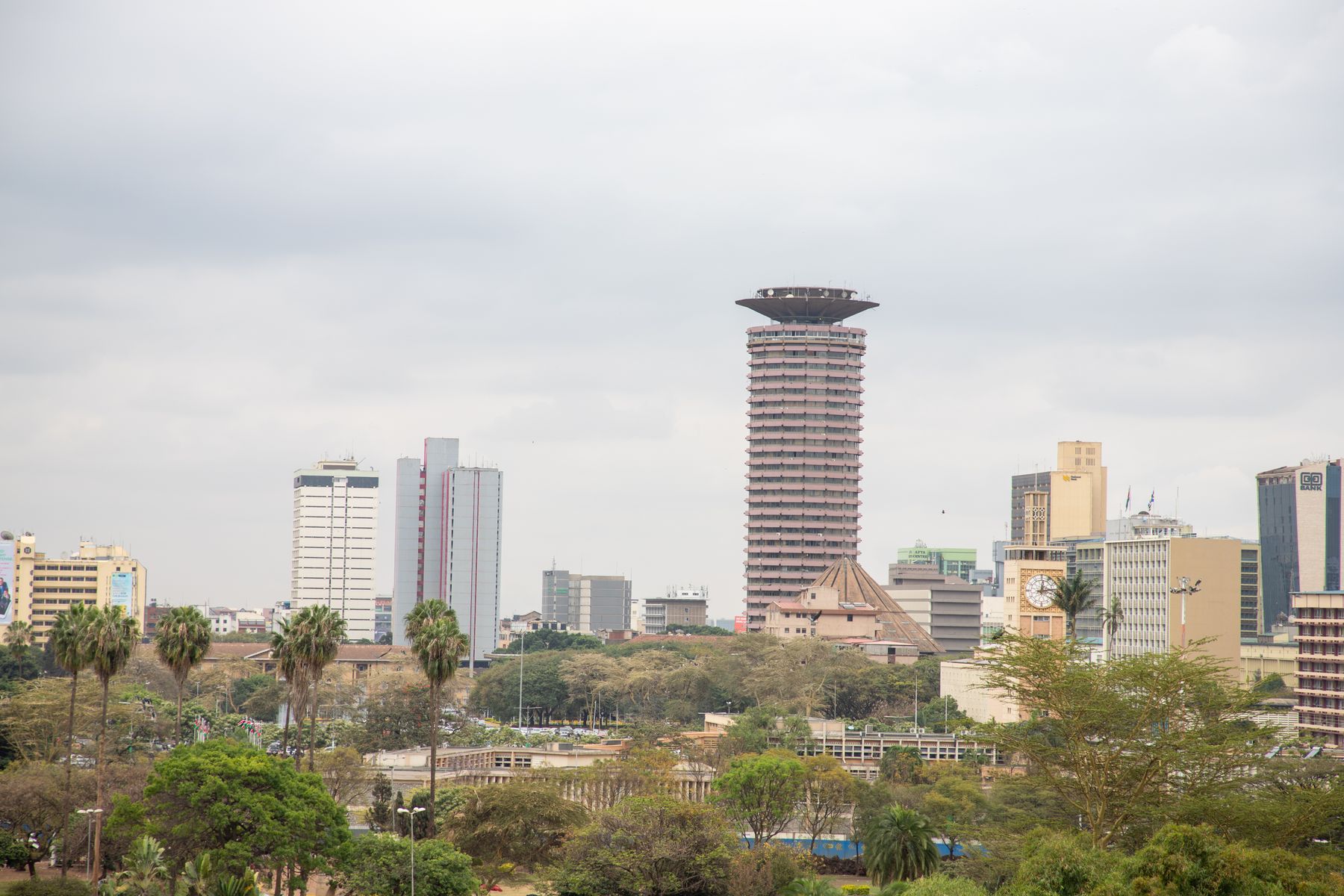
Start in the CBD: Kenya Cinema and the city-centre lanes
The most concentrated stretch of public painting in Nairobi runs through the blocks around Kenya Cinema on Moi Avenue, where the walls of matatu stages, kiosks and back lanes carry portraits, wildlife and lettering commissions. This is a working commercial district, not a gallery quarter, so go on a weekday morning between 9am and 11am when the pavements are busy but passable. Pickpocketing is a real risk in crowded underpasses, so carry a small bag in front of you and keep your phone out of sight. Two hours covers the core lanes comfortably on foot.
Pair the CBD loop with a short hop to the Nairobi Railway Museum area and the older streets behind Kimathi Street, where newer commissions have appeared on hoardings around construction sites and change often. Moi Avenue connects to Haile Selassie Avenue and the Country Bus Station, a short walk with some of the boldest large-format work in the centre. If you want a guide, ask at your hotel about walking tours run by local creatives; rates vary, so confirm the fee and group size in advance rather than relying on a street-level offer.
Westlands and Parklands: the reliable mural corridor
Westlands is where Nairobi's mural scene is easiest to walk, because the density is high and the pavements are more forgiving. The lanes off Mpaka Road and Woodvale Grove, plus the walls along Ring Road Westlands, carry regularly refreshed work on restaurant frontages, parking structures and utility boxes. This is a 15 to 25 minute taxi from the CBD depending on traffic on Waiyaki Way, or a matatu along Waiyaki Way if you are comfortable with public transport. Late afternoon from about 4pm gives the best light and the streets are at their liveliest.
Parklands, immediately north of Westlands, adds a different register: smaller pieces on shopfronts along Third Parklands Avenue and Limuru Road, often tied to local businesses. Because these change with tenants, the specific walls you see will differ from any list you read, so treat the area as a corridor rather than a checklist. Staying in Westlands makes sense if art is your main reason for walking; the neighbourhood is quiet enough to wander in the evening and has the widest choice of mid-range and upper-mid-range hotels in the city.
Kilimani, Kileleshwa and the Ngong Road edge
Kilimani and neighbouring Kileleshwa have become the most active area for commissioned murals in the last few years, largely on the walls of apartment blocks, cafes and offices along Argwings Kodhek Road, Elgeyo Marakwet Road and Chaka Road. The pieces are bigger and more finished than in the CBD, and the streets are leafier and calmer. Walk it on a Saturday morning, starting near Yaya Centre and heading northwest, and you will cover the main clusters in about two and a half hours. Traffic builds sharply after 5pm on Argwings Kodhek, so finish before then.
The trade-off is dispersal: Kilimani's walls sit further apart than Westlands', so you will walk more between them. Combine it with Ngong Road, where the stretch near the Junction mall and along Ngong Road itself has periodic large commissions on boundary walls, though these rotate as sites are redeveloped. Kilimani and Kileleshwa suit travellers who want quiet, serviced-apartment-style stays with easy road access to Karen and the Ngong Hills; the drive to the CBD is 20 to 30 minutes outside rush hour.
Where to base yourself, and what to skip
For a two or three day trip built around walking, I would book Westlands. You get the densest, most walkable mural corridor on your doorstep, straightforward access to Parklands, and a 15 to 25 minute drive to the CBD for the Kenya Cinema loop. Kilimani is the better second choice if you prefer quieter streets and easier parking, and it works well if you are also heading south-west to Karen or the national park. The CBD has few hotels aimed at leisure travellers and is not somewhere I would suggest staying just for the art.
Skip the idea of a single self-guided route covering all three areas in one day; the distances and traffic make it tiring and you will see less. Skip anything advertised as a fixed mural trail with a guaranteed list, since walls are painted over and businesses change. And skip walking these areas after dark unless you know the specific streets. Book Westlands or Kilimani for two nights and treat the CBD as a morning excursion. Best months for dry, comfortable walking are January to March and July to October.
Questions, answered
How long does it take to see Nairobi's main murals on foot?
Allow two hours for the CBD loop around Moi Avenue and Haile Selassie Avenue, and two to three hours for Westlands or Kilimani. Doing all three in one day is possible but rushed; spread them over two mornings instead.
Is it safe to walk these neighbourhoods?
Walk in daylight, keep phones and bags out of sight in crowded CBD areas, and use a taxi after dark. Westlands and Kilimani are comfortable on foot during the day. Ask your hotel about current local advice before setting out.
When is the best time of year to visit Nairobi for walking?
January to March and July to October are the driest, most comfortable months for long walks. April to June brings the long rains, which make pavements muddy and the CBD lanes harder to navigate.
Doing good is the business: every booking through Stay Nairobi funds one verified tonne of carbon removal — same room, same price, no markup.
Start your search